


Spinner Evolution
4.564.00 Reviews
App Specs
- Version
- 0.3.0
- Updated On
- License
- Free
- Downloads
- 100,000+
- Developer
- HyperMonk Games
- Categories
- Racing
- Platform
- Android
Screenshots
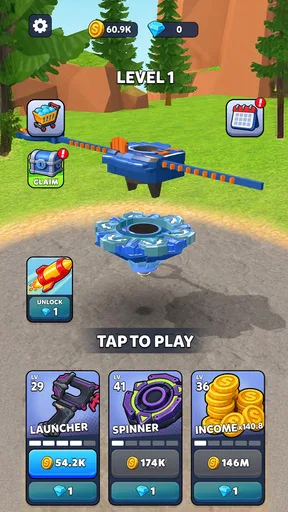
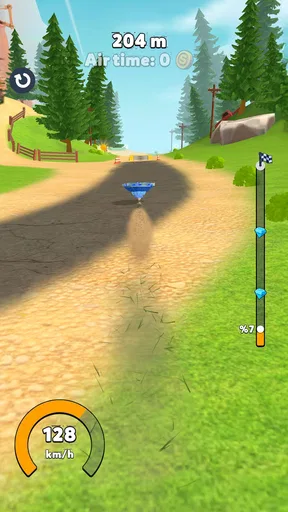
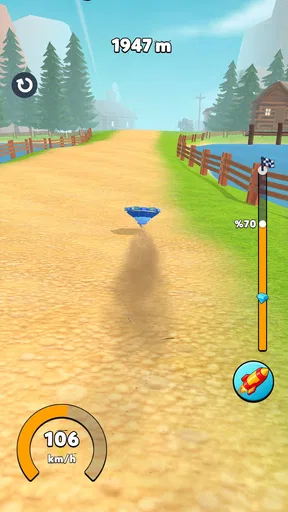
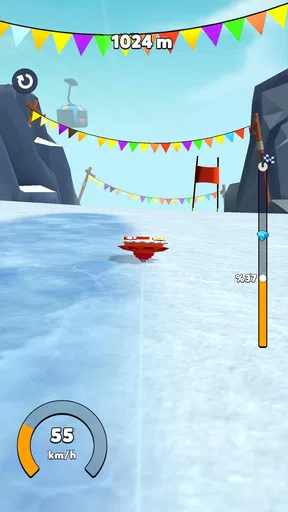
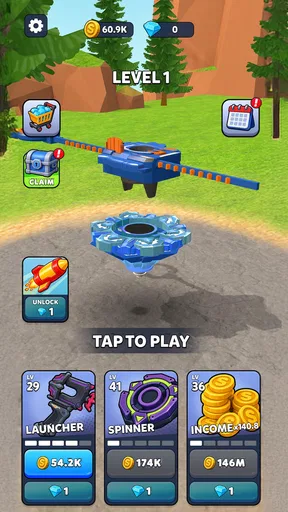
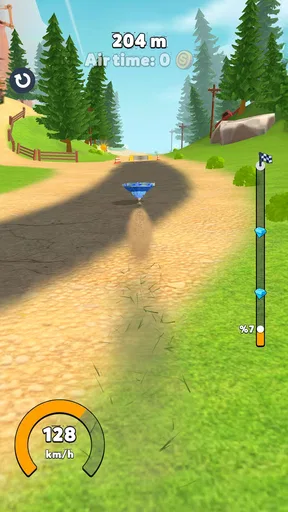
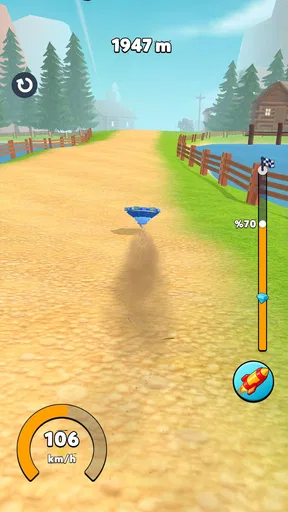
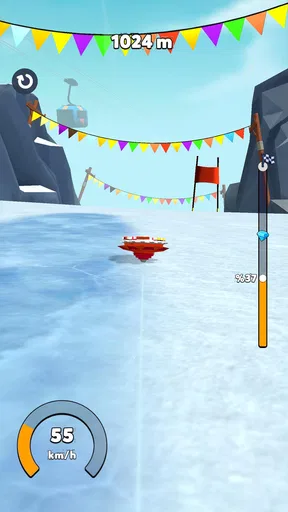
 Analysis by AppCompare
I’m usually cautious with racing games built around a simple action, because a promising first minute can turn repetitive fast. Spinner Evolution makes that central action its starting point: you guide a spinner through an evolving run, aiming to carry it farther and make each attempt feel worthwhile. The idea is easy to grasp, which makes the game approachable when I want something quick rather than a complicated racer to study.
That simplicity is also the main question I’d ask before installing it: does each run give me a reason to try again, or does it become the same motion on repeat? My impression is that the appeal rests on watching a small action produce visible progress. It is best approached as a casual, pick-up-and-play racing game, not as a deep simulation or a demanding competitive racer.
From a simple action to another run
I find the best way to approach Spinner Evolution is to treat its opening action as a small experiment, not a race I need to master immediately. In this section, I’ll look at how that first move can help you judge whether the spinner’s focused rhythm suits you, and why paying attention early makes the next attempt feel more deliberate.
The first action is easy to understand
The game’s premise is built around spinning and moving onward. That gives a new player a clear first goal: get into a run, see how far the spinner can go, and learn from what happens. I like this kind of direct opening for short play sessions. There is less pressure to memorize a long list of controls or understand a complicated racing format before anything starts happening.
In practice, I’d treat the first attempt as a way to learn the feel of the action rather than a test of skill. Pay attention to how your input affects the spinner and what the game counts as progress. That small bit of observation matters in an evolution-style loop: if you rush through the first runs without noticing what changes, the repeat attempts can feel random rather than purposeful.
There is a trade-off here. A focused central action makes Spinner Evolution approachable, but players who want steering nuance, race strategy, or a broad set of driving challenges may find the premise too narrow. This is not the kind of racing game I would choose when I’m looking for a realistic car-handling challenge. It is more suited to someone who enjoys a compact mechanic and wants to see how far it can be pushed.
The feedback rhythm gives attempts their shape
The useful rhythm is action, feedback, then another decision. I make a move, see how the run develops, and have a reason to think about what I might do differently next time. When a game communicates progress clearly, even a short attempt can feel complete; when feedback is hard to read, repetition feels like busywork. That is the point I would keep in mind while deciding whether this style suits you.
Worth Reading Before You Choose

Baby Panda World Brings Quick Play to Modern Phones, but Its Game Library Feels Busy

ESPN’s Live Game View Makes Following Close Games Easier

QuizzLand Review: A Good Fit for Short Trivia Breaks, Not Every Player

Basketball Stars: Multiplayer Is Fast, but Can It Recover When Matches Go Wrong?

WEBTOON Turns Phone Updates Into a Better Reading Routine

Link to Windows Runs on Shared Habits, Not Social Feeds
One practical tip is to change only one thing between attempts. If you alter your timing or approach and then immediately change everything else, it is difficult to tell what helped. A small, deliberate adjustment turns a quick retry into a more satisfying experiment. This is a useful way to get more from a straightforward loop without expecting the game to offer a complex strategy layer.
Another thing I appreciate about this format is that it can fit into awkward gaps in the day. A brief break, a few minutes before heading out, or a quiet moment while waiting for someone are natural situations for a game that does not ask for a long commitment. I would not start it when I need to stop at a precise moment, though: as with any run-based game, the urge to make one more attempt can stretch a short break.
Progress is the reward, but expectations matter
The reward is tied to the sense of moving farther and seeing the spinner evolve through repeated play. That can be satisfying even without the elaborate collection systems or story campaigns found in larger racing games. The appeal is less about arriving at a dramatic finish and more about feeling that today’s attempt has improved on the last one.
For a useful test, notice whether you can explain why a run went better or worse. If the feedback helps you connect an action with an outcome, the loop has something to teach you. If you find yourself repeating the same gesture without understanding what changed, the game may not offer enough depth for your taste. I would give it a few focused attempts before deciding, rather than judging it from a single run.
That distinction is important when comparing it with usual alternatives. Traditional racing games tend to make the vehicle, track, and competition the main attractions. Spinner Evolution puts the spinner’s progress at the center instead, so it is a better fit for a player who wants a small, repeatable challenge than for someone seeking varied tracks, vehicle tuning, or head-to-head racing. The right choice depends less on which game is “better” and more on whether you want a quick loop or a fuller racing package.
A reset can be the invitation, or the sticking point
Repeated runs are a natural part of a game built around getting farther. Starting over can make improvement easy to notice: I can try a different approach and compare the result with my last attempt. The reset is not automatically a flaw. It becomes frustrating only if I cannot see what the previous run taught me or if the same opening begins to feel like a chore.
My advice is to set a small goal before playing, such as learning how a particular action affects a run, rather than treating every attempt as a demand to beat a personal best. That keeps the reset from feeling like failure. It also gives you a sensible stopping point: once you have answered your own question or feel your attention drifting, close the game instead of retrying out of habit.
This is where Spinner Evolution may not be the right choice. If you prefer a continuous campaign, a strong sense of narrative, or races where each course brings a different tactical problem, look for a more substantial racing game. Likewise, anyone who dislikes repeating a core action should be wary of a game whose pleasure depends on returning to that action and finding a reason to improve.
Who I’d recommend it to
I’d suggest it to casual players who like compact games with a clear central mechanic and a visible sense of forward movement. It can work well as a low-commitment option on a phone, especially when you want an activity that is easier to pick up than a full driving game. The game is free to download, carries an Everyone age rating, and is made by HyperMonk Games.
The audience response is encouraging without being a guarantee that every player will enjoy the loop: it has a 4.5 average from around three thousand ratings, and more than one hundred thousand installs. I treat those figures as a useful sign that people are finding an audience for it, not as a substitute for matching the game to your own preferences. Ratings cannot tell you whether you personally enjoy retry-based play.
It is also worth knowing that optional in-app purchases are available, with individual items priced from $1.99 to $49.99. If you prefer to keep spending predictable, decide in advance whether you are comfortable with purchases appearing in a free game. The game’s basic appeal should be judged by whether its core action holds your attention, rather than by assuming that spending is necessary to enjoy it.
Compatibility and the practical decision
The current version is 0.3.0, and the minimum operating-system requirement is 7.1. It was released on July 6, 2026. Those details make it sensible to check that your device meets the requirement before installing, particularly if you use an older phone or tablet.
If you are wondering whether it suits a quick daily routine, I’d say yes when you have a few spare minutes and enjoy trying to improve through repetition. If you want a deep racer to settle into for a long evening, probably not. If you are unsure whether the loop will hold you, start with a handful of attempts and pay attention to whether the feedback gives you a real reason to adjust your approach.
My verdict on the loop
Spinner Evolution works best when each reset feels like a fresh, informed attempt rather than a reflex. Its straightforward spinner-focused racing idea makes it approachable, and the promise of progress gives short sessions a natural shape: act, see what happened, take the reward of improvement, and decide whether another run is worth it.
I’d recommend giving it a try if you enjoy compact, repeatable challenges and do not need a traditional race structure to stay interested. I’d skip it in favor of a more varied racer if you want detailed driving, changing tracks, or a campaign that continually introduces new situations. For me, the deciding factor is simple: if I’m curious about what one small adjustment will do, the next session has a purpose. If I’m only restarting because I feel I should, it is time to move on.
A sensible way to fit it into a day
I can see this working especially well as a small transition game: the few minutes after lunch before returning to work, or the wait before a ride arrives. In that setting, I’d choose one specific thing to notice during a run, then stop when I’ve learned it. That makes the session feel intentional instead of turning every spare moment into an open-ended chain of retries.
It is also a reasonable choice for someone who wants racing-themed play without settling in to manage a car, memorize a course, or commit to a longer event. The trade-off is that the compact format gives less room for variety. If you usually enjoy changing vehicles, learning different tracks, or racing against other people, a conventional racer will likely keep offering more kinds of decisions.
What to watch before spending
Because purchases are offered inside a free game, I’d make my decision about spending separately from my decision about whether the core loop is enjoyable. First see whether the basic action keeps you curious; only then consider whether any optional item seems worthwhile to you. This avoids treating a purchase as a shortcut to interest when the real question is whether repeating and refining the spinner’s run is fun in the first place.
For parents or anyone choosing a game for a younger player, the Everyone age rating is a useful starting point, while the in-app purchase options are worth keeping in mind when setting expectations around spending. I would explain that the game can be played as a free download and agree on purchase boundaries beforehand, rather than assuming that a free price means there is nothing to decide.
Who may want a different kind of racer
I would pass on this one if my main reason for opening a racing game were to practice precise cornering, compare vehicle handling, or work through a sequence of distinct courses. Its spinner-led premise is deliberately more focused than that. Players who prefer visible competition may also be better served by a game organized around opponents or race results, since the satisfaction here comes from personal progress across attempts.
On the other hand, that focus can be an advantage for people who find full racing games too demanding for casual play. There is no need to turn a spare minute into a study session: the useful question is simply whether an action produced a result you want to understand. If it did, another run has a clear purpose. If it did not, stopping is a perfectly good outcome rather than a sign that you missed some hidden strategy.
Pros
- Simple one-touch controls make it easy to start playing.
- Quick rounds suit short breaks and casual play.
- Unlockable spinner designs add a visual collection goal.
- Progression gives you targets to work toward between runs.
- The basic gameplay is easy to understand without a tutorial.
Cons
- Gameplay can feel repetitive after extended sessions.
- Progress may slow as upgrades become more expensive.
- Spinner designs may offer limited gameplay variety.
- Frequent play can depend on watching ads or waiting.
- The simple mechanics may not appeal to players seeking depth.
FAQs for Spinner Evolution
What is Spinner Evolution?
Spinner Evolution is a casual mobile game built around spinning and upgrading a spinner. Players typically earn progress by spinning, collecting rewards, and unlocking improved designs or new stages. Its straightforward premise makes it easy to pick up for short play sessions, though the exact features and progression may vary by version. Check the store listing and screenshots to confirm what is included in the edition available for your device.
Is Spinner Evolution free to download and play?
The app may be available to download without an upfront purchase, but free-to-play games can include advertisements, optional in-app purchases, or both. These may offer faster progress or additional items, depending on the current version. Before installing, review the pricing details on Google Play or the App Store, and check whether purchases can be restricted in your device settings if children may use the game.
Can I play Spinner Evolution offline?
Offline availability can depend on the version and on features such as advertising, cloud saves, or online services. The core spinning gameplay may work without a constant connection, but some rewards or menus could require internet access. If you plan to play while travelling, try launching the game with connectivity disabled after installation, and consult the store description for any stated connection requirements.
Is Spinner Evolution suitable for children?
Spinner Evolution’s simple controls may make it accessible to younger players, but suitability depends on the content, advertisements, and purchase options in the version you download. Check the age rating and content labels in the relevant app store, and review the privacy information as well. Parents may also want to use device-level purchase approvals and screen-time controls, especially if the game displays ads or offers optional purchases.
Which devices support Spinner Evolution, and how can I download it safely?
Availability and compatibility depend on your device’s operating system, region, and the version currently offered. Check the official Google Play or Apple App Store listing for supported devices, required OS version, app size, and recent updates. Downloading from the official store is the safest option and helps ensure you receive the authentic app and its updates; avoid unfamiliar download sites that may distribute altered files.


